



By using our website, you agree to the use of cookies as described in our Cookie Policy
Blog
Why Are Cracks Showing Up in Your Seminole Drywall?
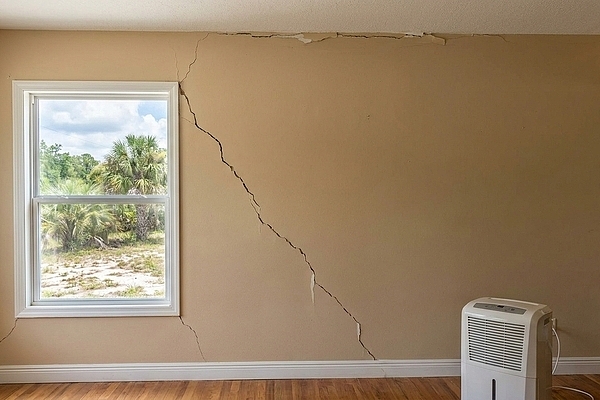
Most homeowners see a crack in the wall and assume it's just age. Paint wearing down. Normal stuff. But what shows up on the surface isn't always the full story — and if you're not paying attention, you're letting small problems turn into expensive ones. Drywall doesn't crack for no reason. There's always a cause. And in Seminole, the conditions are uniquely suited to make those causes worse.
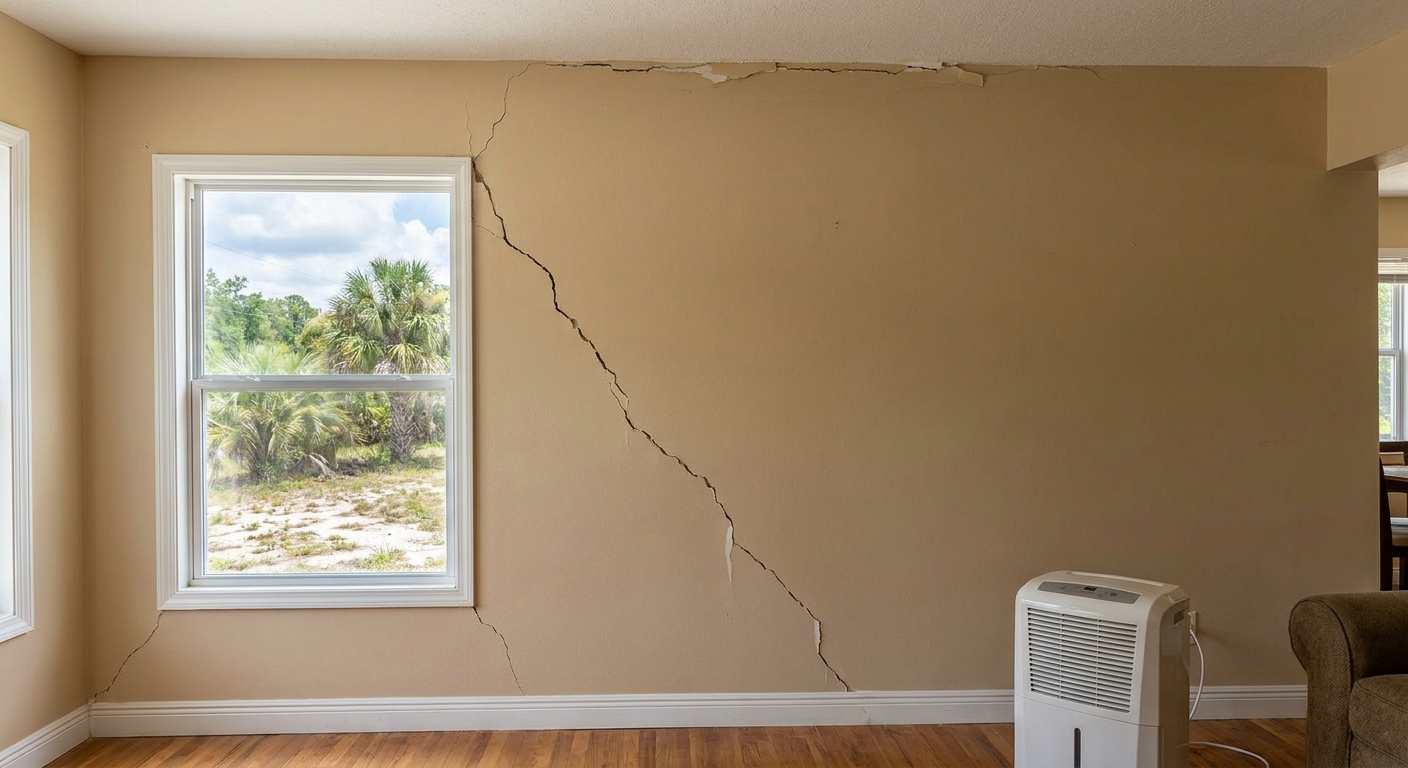
So here's what we know. If you're seeing splits along seams or above doorways, that's not random. It's pressure. It's movement. It's the house reacting to forces most people never think about. Every crack tells you something — and the sooner you read it right, the better your odds of fixing it before it spreads.
The Ground Under You Isn't Solid
Seminole sits on sand. Lots of it. And sand doesn't behave like bedrock. It shifts when water levels change. It compresses under weight. And when your foundation moves — even just a fraction — the walls above feel it. That's where those diagonal cracks near corners come from. That's why you see separation between the ceiling and the wall.
Foundation settling is common. It's not always catastrophic. But it's also not something you ignore. If the cracks keep getting wider, or if doors start sticking in frames they used to clear easily, the foundation isn't done moving. And neither are the walls.
Humidity Does More Damage Than You Think
Florida air is thick with moisture year-round. That humidity seeps into wood framing, drywall backing, even the tape holding joints together. When moisture gets absorbed, materials expand. When it dries out, they contract. Over and over. Every cycle weakens the structure a little more.
We've seen this pattern repeat in hundreds of homes. The crack starts small — a hairline along the ceiling. Then it opens up. Then it branches. And by the time someone finally addresses it, the drywall's already soft behind the surface. Moisture doesn't just crack drywall. It rots the support behind it.
Sloppy Installation Leaves You Vulnerable
Not every contractor tapes joints the same way. Some rush the mud. Some skip the second coat. And some just don't secure panels tightly enough to the studs. When the work isn't clean from the start, cracks are inevitable.
Here's where installation mistakes show up fastest:
- Seams that weren't properly embedded with tape
- Fasteners placed too far apart or driven too deep
- Joint compound that wasn't feathered or sanded evenly
- Panels installed before framing had fully dried or settled
If your drywall was installed during a renovation or addition, double-check who did the work. Cheap labor often means cutting corners. And corners cut during install turn into cracks within the first year.
Temperature Swings Add Stress You Don't See
Even in a mild climate, your house expands and contracts with the seasons. Warmer months cause wood to swell. Cooler stretches let it shrink back. And drywall — rigid as it is — can only flex so much before it gives.
This is especially true in homes with poor insulation or inconsistent HVAC use. When one side of the wall heats up faster than the other, or when attic temps spike while the living space stays cool, you get uneven expansion. That imbalance creates stress points. And stress points become cracks.
When the Crack Means Something Bigger
Sometimes a crack isn't just drywall fatigue. It's a symptom of structural failure. Rotting beams. Termite damage. Improperly loaded joists. These issues don't announce themselves with flashing lights — they show up as fissures in your walls.
Watch for these warning signs:
- Cracks that run vertically from floor to ceiling
- Wide gaps that expose framing or insulation
- Cracks accompanied by sagging ceilings or uneven floors
- Damage that reappears shortly after being repaired
- Doors and windows that no longer close properly
If you're seeing any combination of those, call someone who knows structure — not just someone who patches drywall. The cosmetic fix won't hold if the bones are broken.
What You Can Do Before It Gets Worse
Prevention beats repair every time. And most of what causes drywall cracks is manageable if you stay ahead of it. Control the moisture. Watch the foundation. Don't let small issues sit until they're big ones.
Here's what keeps walls intact longer:
- Run dehumidifiers in high-moisture rooms like bathrooms and laundries
- Seal windows and doors to prevent air leaks that cause temperature imbalance
- Check for plumbing leaks regularly — especially behind walls
- Inspect your foundation annually for cracks or shifting
- Hire pros who know Florida construction and the challenges it brings
For hairline cracks, spackle and paint will do the job. For anything deeper or recurring, you need compound, mesh tape, and patience. But if the crack keeps coming back no matter what you do, stop patching and start investigating.
Reading the Crack Like a Map
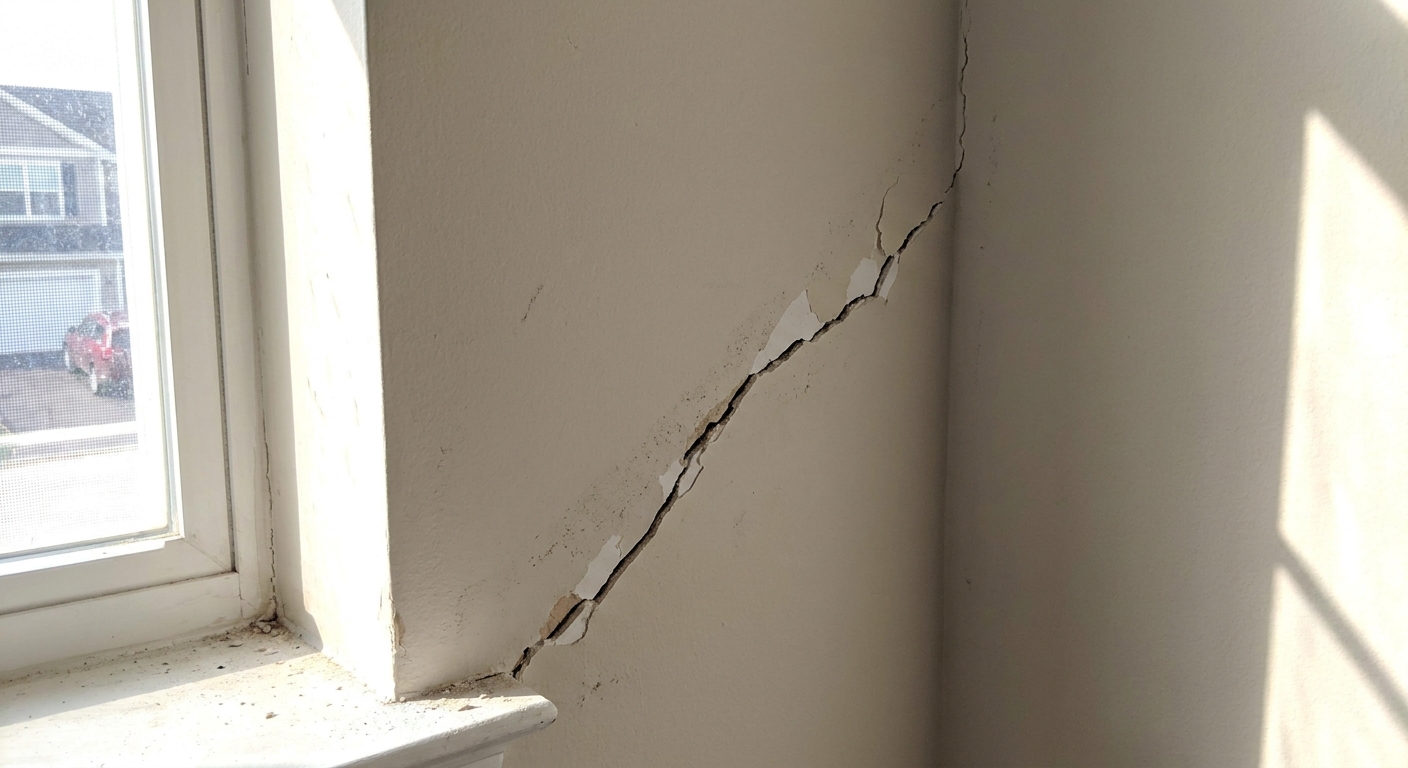
Every fissure has a story. A thin horizontal line along a seam? Probably tape failure. A jagged diagonal near a corner? Foundation movement. Spiderweb patterns around fasteners? Over-driven screws or poor mudding technique.
We've walked enough homes to know the difference between cosmetic wear and red-flag damage. And the homeowners who catch it early? They spend hundreds, not thousands. The ones who wait until the ceiling's sagging or the wall's bowing? They're looking at full replacements.
Why Waiting Costs More Than Fixing
Ignoring a crack doesn't make it go away. It makes it grow. And the longer you wait, the more systems get involved. What starts as a drywall issue becomes a framing issue. Then an insulation issue. Then a mold issue. Suddenly you're not patching anymore — you're gutting sections of the house.
Here's what delays typically lead to:
- Expanded cracks that require full panel replacement instead of simple repair
- Moisture infiltration that damages insulation and wooden supports
- Mold growth behind walls that forces mold remediation work
- Structural damage that requires engineering assessments and permits
The math is simple. A tube of spackle and an hour of work now, or a contractor crew and a week of disruption later. Most people choose wrong because they assume the crack will stop on its own. It won't.
Getting the Right Help at the Right Time
Not every crack needs a structural engineer. But some do. And knowing which is which separates smart homeowners from ones who overpay or underreact. If you're seeing minor cosmetic splits, handle it yourself or hire a handyman. If you're seeing movement, repetition, or anything that suggests the bones of the house are shifting, bring in someone licensed.
A good contractor will assess the crack, trace it back to the source, and fix both the symptom and the cause. A bad one will slap mud over it and send you a bill. Ask questions. Get explanations. And don't accept "it's just settling" as an answer unless they can show you why that's true.
Your Walls Are Talking
Cracks aren't random. They're reactions. Your house is responding to forces — gravity, moisture, temperature, time. And in Seminole, where humidity runs high and the ground stays soft, those forces hit harder than in most places. Pay attention to what's showing up on your walls. Track when it started. Notice if it's spreading. And act before the crack becomes a canyon.
We've guided homeowners through everything from simple patches to full structural assessments. And the ones who move fast? They save time, money, and stress. The ones who wait until the damage is obvious? They're the ones calling in a panic when the ceiling starts bowing. Don't be the second group. If you're seeing cracks that won't quit, water stains spreading, or damage from unexpected events, professional home remediation and restoration ensures the root cause is addressed correctly. Whether you need targeted home repairs, full home renovations, comprehensive home remodels, or expert water damage remediation, working with experienced professionals means your home gets the attention it deserves before small issues become major expenses. Take a look at our photo gallery to see the quality of work we deliver, or contact us today to schedule an inspection and get answers you can trust.
Let’s Protect Your Home Together
We know how stressful it can be to spot new cracks in your drywall and wonder what’s really going on behind the scenes. Let’s get ahead of the problem before it grows—reach out to a team that understands Seminole homes inside and out. Call us at 727-443-4246 or request a quote and let’s make sure your walls stay strong for years to come.
‹ Back
Recent Posts
-
What to Expect During Fire Damage Cleanup in Seminole
September 28, 2026
-
Does Your Tampa Bay Bathroom Feel Outdated or Too Small?
September 14, 2026
-
Why Are Cracks Showing Up in Your Seminole Drywall?
August 31, 2026
-
Is Your Tampa Bay Home Ready for Hurricane Season Repairs?
August 17, 2026
-
Can Water Damage Cause Hidden Mold in Seminole Homes?
August 3, 2026